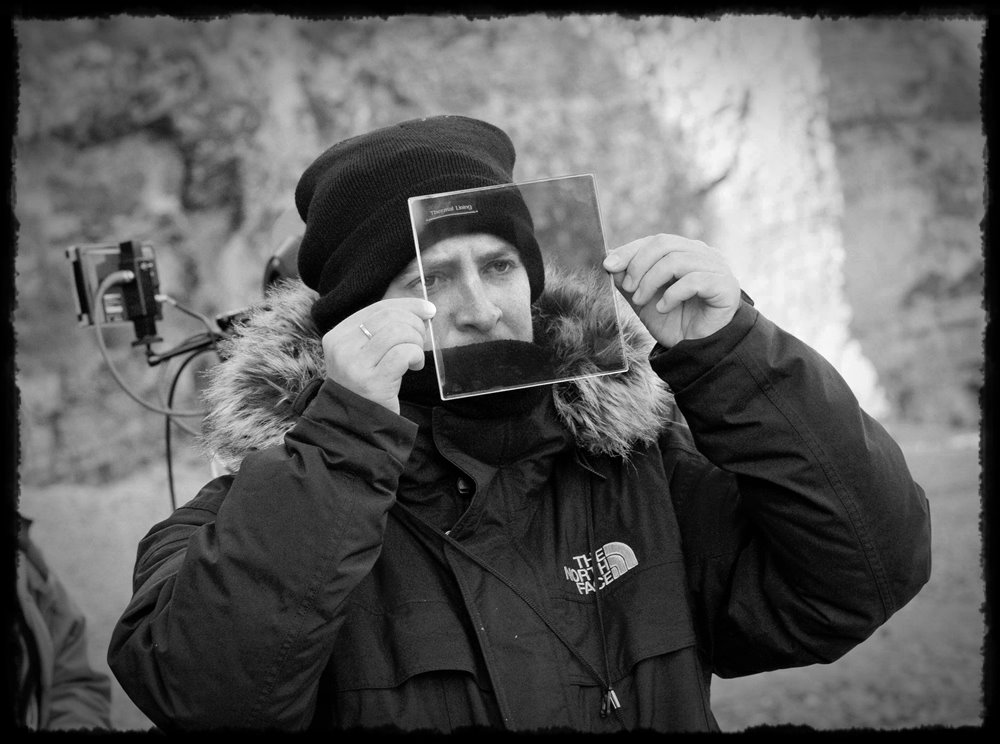
 I was born in 1976, in Madrid. At the age of six, my grandfather gave me my first photo camera, and from that very moment I began to see life through a frame.
At school, I was very clear about what I wanted to be when I grew up: a photographer. I regularly read photography magazines and books. Fate led me, at the age of 17, to work in the editorial office of a photography magazine: Revista Foto Profesional—which later became Revista Foto.
Those early days were unforgettable. My role was to manage the archive, and through my hands passed photographs by the best photographers in the world. My only task was to classify them alphabetically by author. Since there were so many images to sort, and I found it impossible to treat them as mere paper documents, I would arrive at work an hour early every day to study them, observe them, and enjoy them… Then, when 9 a.m. came, I would file them without wasting a second—I had already savored them. I had immersed myself in the brilliance of photographers such as Richard Avedon, Henri Cartier-Bresson, Robert Doisneau, Ansel Adams, Robert Capa, Annie Leibovitz… and countless others I could never fully list.
One day, a book on Spanish Directors of Photography fell into my hands. I had to write a 15-line review for the magazine’s “new releases” section. It was my first assignment as a writer, so, as you can imagine, I approached the book with great excitement. About ten pages in, I discovered that the role combining my passion for photography and cinema was that of the Director of Photography. A chance encounter that led me, at that very moment, toward cinematography. If a single image thrilled me, 24 images per second completely fascinated me.
A year later, I began a degree in Audiovisual Communication. I balanced my studies with work in audiovisual media, in television and production companies. At the same time, I shot short films as a director of photography and attended film workshops whenever I had the chance.
Without a doubt, one of the most exciting moments came when I attended The Maine Workshops in the United States. It was the first time I shot on film, in 16mm, with renowned directors of photography as instructors.
Some time later, while at the lab watching the answer print of a short film I had shot, I was unexpectedly offered a position in the color grading department. I had worked with labs as a client on short films, but I had no idea how to grade. Still, it was a wonderful opportunity to learn the intricacies of the photochemical process, such an important part of post-production for directors of photography. I started grading short films (including some of my own), and within three months I had earned the opportunity to grade feature films. Those were years of intense learning that I would later apply to my own projects.
Finally, in 2010, that opportunity came with Ways to Live Forever, a film that won more than 15 national and international awards and was nominated for several categories at the CEC Awards (Spanish Circle of Film Writers), including Best Cinematography.
Since then, over the years, I have been fortunate to work with extraordinary directors and crews on projects that have taken me from Madrid to New York, from Galicia to Buenos Aires. From independent productions to major projects for platforms such as Netflix, Disney+, Movistar, and Paramount+.
Every shoot is a different world, but in all of them I seek the same thing: for the image to serve the story.
Because if those mornings classifying photographs by Cartier-Bresson or Adams taught me anything, it is that photography is, above all, a craft.
One that is learned by looking, making mistakes, and looking again.
And I am still searching.